Some design trends arrive as a color name or a single collectible object. The most useful ones change the way a room feels before they change the way it photographs. This week, the phrase soft architecture is surfacing across interior coverage: Apartment Therapy identifies it as an emerging home trend, while recent furniture and interiors stories from Dezeen and Architectural Digest keep returning to tactile surfaces, sculptural forms, layered window treatments, and rooms designed for lingering rather than merely looking finished.
Soft architecture is not a demand for a house full of curves, beige upholstery, or fragile styling. It is a practical response to a familiar problem: many renovated spaces are technically efficient but emotionally hard. Flat drywall planes, sharp cabinet edges, bare windows, and one-note lighting can make a room feel louder than its square footage. Soft architecture treats those fixed surfaces as an opportunity. It uses depth, texture, rounded transitions, fabric, and flexible furniture to make everyday rooms absorb sound, hold light more gently, and invite people to settle in.
For homeowners, this is good news. The trend can be applied in stages, from a curtain track and a better furniture layout to a full renovation of niches, lighting, and millwork. The goal is not to erase structure. It is to give structure a more human edge.
Why Soft Architecture Is Gaining Ground Now
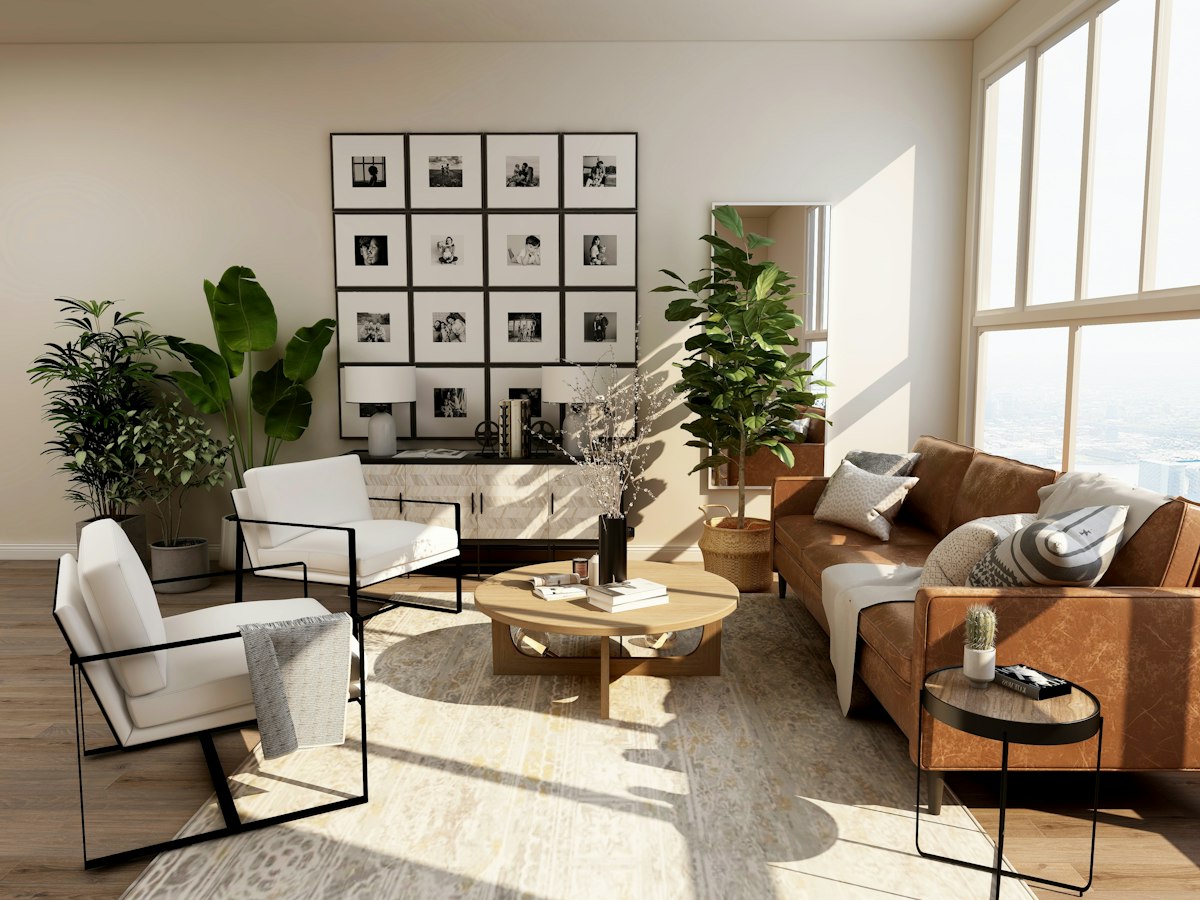
The timing is logical. Homes are asked to do more than ever: host remote work, family downtime, meals, entertainment, storage, and sleep. A room that is optimized only for circulation or visual minimalism can feel exposed once real life begins. Soft architecture answers with visual and physical buffering. Think of an upholstered bench where a hard corner once stood, a full-height curtain that improves both privacy and acoustics, or a rounded coffee table that lets people move through a compact living room without constantly navigating edges.
The current signal is broader than one publication. Dezeen's late-July furniture coverage highlighted new seating and metal-focused product launches, including a 3D-printed recycled-plastic chair with a voluptuous profile. Architectural Digest's recent design guidance focuses on layered drapery as a route to elevated interiors. Together, those stories point to a useful distinction: softness is not synonymous with nostalgia. It can be technologically current, materially responsible, and visually edited. What matters is the sensory result—more relief, more depth, and fewer abrupt transitions.
It also makes renovation decisions easier to prioritize. Rather than treating furnishings as an afterthought once construction is complete, soft architecture asks how lighting, window treatments, storage, and seating will work as one system. That mindset reduces the common mismatch between a crisp new shell and furniture that feels temporary inside it.
Start With the Envelope: Light, Drapery, and Acoustic Texture
The fastest way to make a room feel softer is to work with the architectural envelope before buying more accessories. Window treatments are especially powerful. Mounting a track near the ceiling and letting panels fall close to the floor visually raises the room, while a sheer layer plus a more substantial drape gives you control over daylight, privacy, and temperature. The layered-drapery conversation matters because fabric changes more than a view: it breaks up reflective glass, softens sound, and creates a transition between the outside world and the room.
Next, consider the surfaces that carry sound. A rug with enough scale to sit under the front legs of seating, textile wall art, upholstered dining chairs, or even a fabric-fronted screen can make a hard-finished room less echo-prone. This is not an excuse to cover every surface. One or two large, purposeful soft elements are usually more effective than many tiny decorative ones. In kitchens and baths, where fabric is less practical, the same principle can appear through matte finishes, rounded tile edges, wood accents, or warmer layered lighting.
Lighting should follow the same logic. Replace a single bright overhead source with a hierarchy: ambient light for the whole room, task light where work happens, and a low-level accent light that creates depth in the evening. Aim for lampshades, diffusers, wall washes, and reflected light rather than a glare-heavy grid. A renovation budget does not need to solve every room at once; start with the spaces used after dark, because that is when harsh lighting is most obvious.
Use Curves as Connectors, Not as a Costume
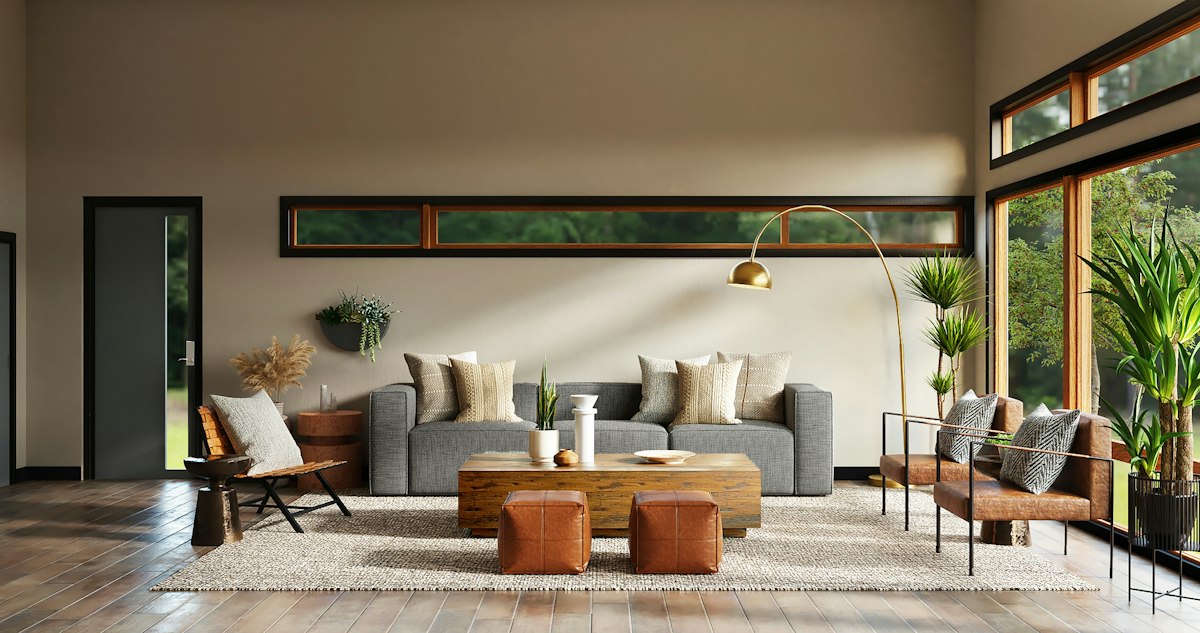
Rounded shapes are the visible shorthand for soft architecture, but the best versions are selective. A curved silhouette works when it improves flow or balances a hard plane. In a narrow room, an oval or rounded rectangular table eases circulation. Near a rectangular media wall, a low rounded chair or a generously cushioned sofa can interrupt the boxiness without making the room feel themed. In a renovation, a softly arched opening, eased plaster corner, or built-in niche can create the same relief at a larger scale.
The key is proportion. Begin by identifying the room's dominant hard geometry: perhaps long cabinet runs, a large television, a concrete floor, or a square bay window. Add one substantial counterpoint rather than five competing curves. A sofa with generous edges can be the main connector in a living room; in a bedroom, a fluted nightstand and a fabric headboard may be enough. Curves also need negative space around them. Keep pathways clear, and let the eye read the silhouette rather than crowding it with small furniture.
This approach is more durable than trend-chasing. If you later change colors or accessories, a well-proportioned rounded piece still performs its real job: it makes circulation calmer and offers a more forgiving visual rhythm. That is why furniture with modularity, deep seating, concealed storage, or adaptable dimensions is particularly relevant to the trend. Softness should improve use, not reduce it.
Choose Materials That Look Better With Daily Life
Soft architecture is tactile, but it should not be precious. Pair materials with different levels of visual weight: a soft woven textile against a warm wood grain, a fluted surface beside a smooth painted wall, or a matte metal detail against upholstered seating. The contrast lets a room feel layered without relying on a busy palette. Keep the color story restrained—warm whites, clay, oat, muted green, walnut, tobacco, or a softened blue all work—then make texture do more of the work.
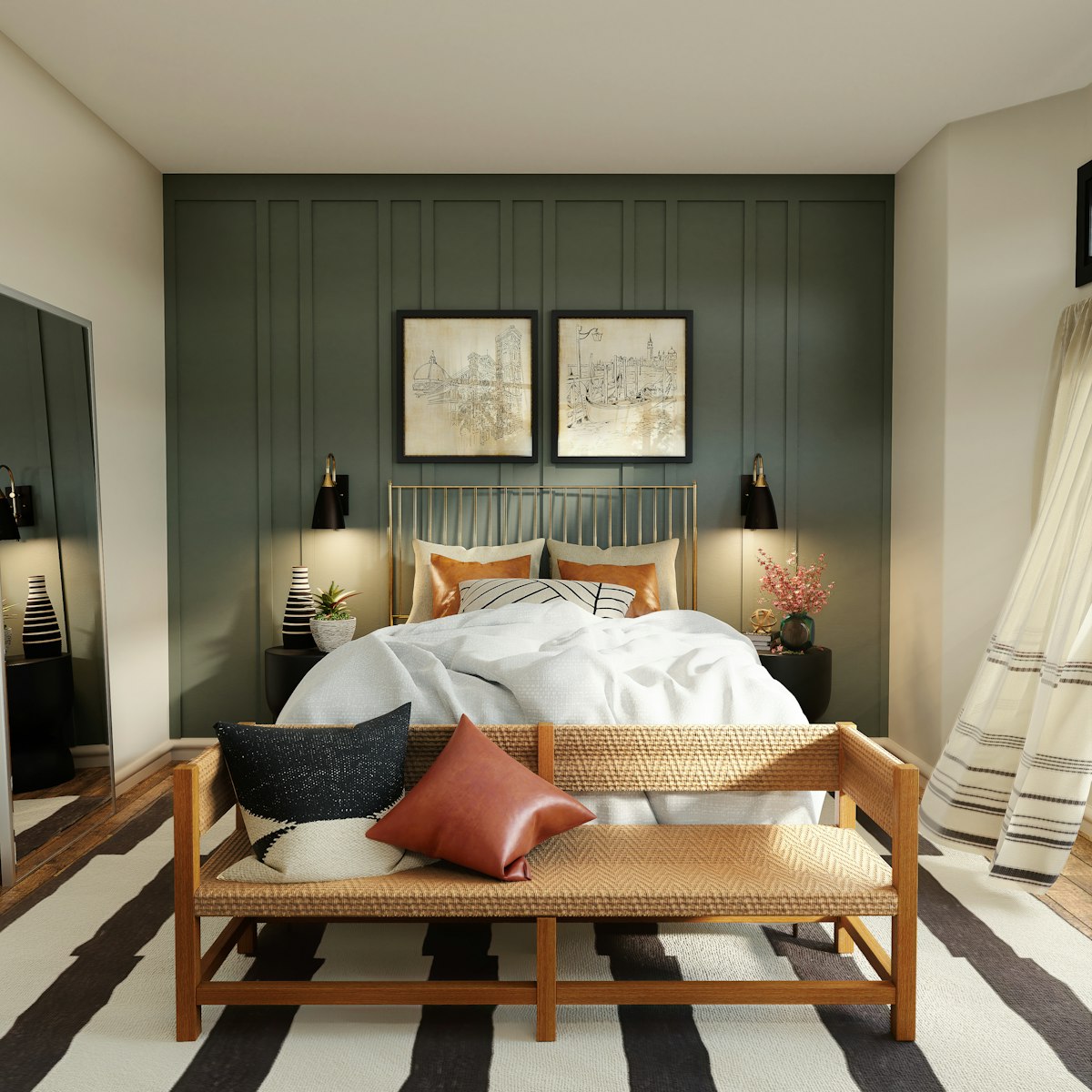
Material choices should also anticipate maintenance. For a busy living room, select upholstery with a weave that disguises minor variation and a tone that works with the room's light. In an entry or dining zone, choose a cabinet finish that can tolerate frequent touch and use baskets, trays, or drawers to keep surfaces from becoming visual noise. In bedrooms, combine hard-working storage with a small amount of softness at the point of use: a fabric shade, rounded hardware, a textured throw, or a bedside surface that keeps charging cords and nighttime essentials contained.
There is a sustainability case for this restraint too. Rooms that rely on a few durable, adaptable pieces are easier to refresh than rooms built around a one-season look. Recent design launches featuring recycled material and expressive construction reinforce that responsible material choices do not have to look austere. Buy fewer items with clearer roles, then give them room to age well.
Plan a Soft-Architecture Renovation in the Right Order
A successful softening project begins with observation, not a shopping cart. Spend a week noting where the room feels exposed, noisy, cluttered, or awkward to move through. Is the problem a bare window, an overly bright ceiling fixture, a sofa that does not invite use, or storage that pushes everyday objects onto display? Each issue suggests a different intervention. Fixing the actual friction point prevents the familiar cycle of adding décor without changing the room's performance.
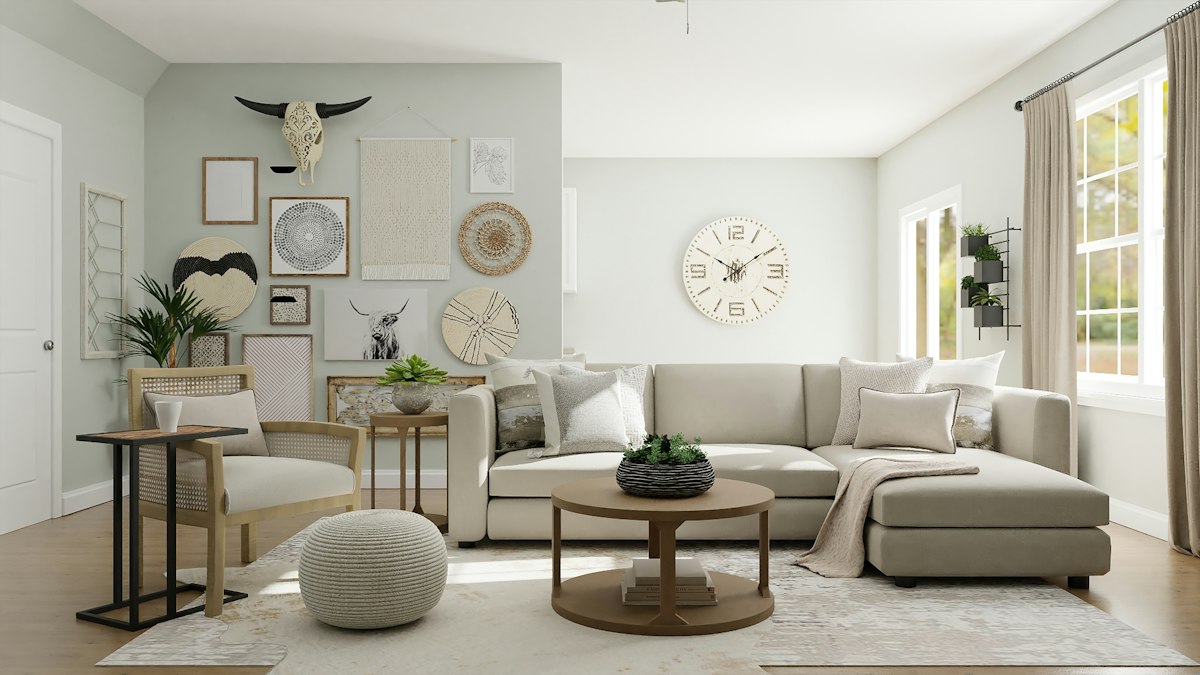
For a larger renovation, sequence the decisions from permanent to movable. First address openings, electrical placement, ceiling tracks, built-ins, and large lighting. Then set the anchor furniture—sofa, dining table, bed, or storage cabinet. Finally add rugs, curtains, lamps, and smaller objects. This order matters because a curtain track or wall sconce is hard to retrofit elegantly after the room is furnished, while a cushion or side table can be adjusted any time.
Measure with real use in mind. Leave a comfortable path around a sectional, verify door and drawer clearances, and plan where cables, remotes, blankets, and chargers will live. A soft room is not a room with no visual boundaries; it is a room where useful boundaries are quietly built in. Closed storage protects the relaxed effect by giving daily clutter a destination.
Practical Takeaways for a Softer Home
- Choose one anchor move per room: a ceiling-height curtain treatment, a more inviting sofa, a large rug, or a storage piece with a warmer finish will have more impact than several small purchases.
- Layer light before adding color: use ambient, task, and accent sources to make a neutral room feel dimensional at night.
- Round the traffic path: introduce curves where people turn, pass, or gather; do not add them everywhere.
- Let texture replace clutter: combine wood, woven textiles, fluting, matte paint, and upholstery in a limited palette instead of filling surfaces with objects.
- Protect the calm with storage: every high-use zone needs a place for chargers, remotes, linens, papers, and the small items that otherwise accumulate in view.
- Renovate in layers: complete permanent infrastructure first, then use adaptable furniture and textiles to tune the room over time.
Featured Products for the Soft Architecture Look
107" L-Shaped Modular Sectional Sofa with Chaise, Beige - Yanosaku

A deep modular sectional is a strong living-room anchor for this direction. Its low, relaxed profile can soften a room dominated by straight media walls and gives you flexible seating for reading, movie nights, and everyday gathering.
23" Fluted LED Nightstand with Charging Station, Drawers, Oak - Yanosaku

Fluted detailing adds a small but deliberate textural layer beside the bed, while drawers and charging capacity help keep surfaces quiet. It is an easy way to make a bedroom feel more composed without losing daily convenience.
15"–30" Expandable Sideboard with 3 Drawers, White - Yanosaku

Soft architecture still needs hard-working storage. This expandable sideboard offers a compact visual footprint plus drawers and enclosed space, helping a dining or living area stay open and calm between gatherings.
Conclusion: Make the Structure Work for You
Soft architecture is ultimately a permission to design for the way a home is experienced, not just the way it is photographed. Layer the light, soften the transitions, choose materials with depth, and give everyday objects a place to disappear. Start with one room and one friction point; the result can be a home that feels quieter, warmer, and more usable without losing its personality. Explore Vektaya's furniture collection to build your own softer, smarter foundation—one purposeful piece at a time.
0 comments